 Cognitive Fitness in Motion
Your mind deserves a workout too
RuckWild technology makes cognitive training a regular part of your fitness routine, promoting an active outdoor life.
- Audio challenges put memory, attention and mental agility to work while you walk with weight—or “ruck”—bringing mind and body training together.
- Research has reported additional cognitive benefits from simultaneous physical activity and brain training compared with the benefits of brain training or physical training alone.
- Rucking is the ideal activity for combined mental and physical challenges
- Adding weight rather than speed, rucking requires meaningful muscular and aerobic effort at a pace and exertion level that affords you room to listen, think and remain aware of your surroundings.
- Rucking effectively engages your core, legs, upper back, posterior chain and stabilizing muscles while retaining a walking gait, which means less repetitive stress on the body than running, and a more sustainable practice.
- Try it. Your body will feel the difference.
Made for the Lifelong Athlete in All of Us.
Explore Cognitive Fitness Training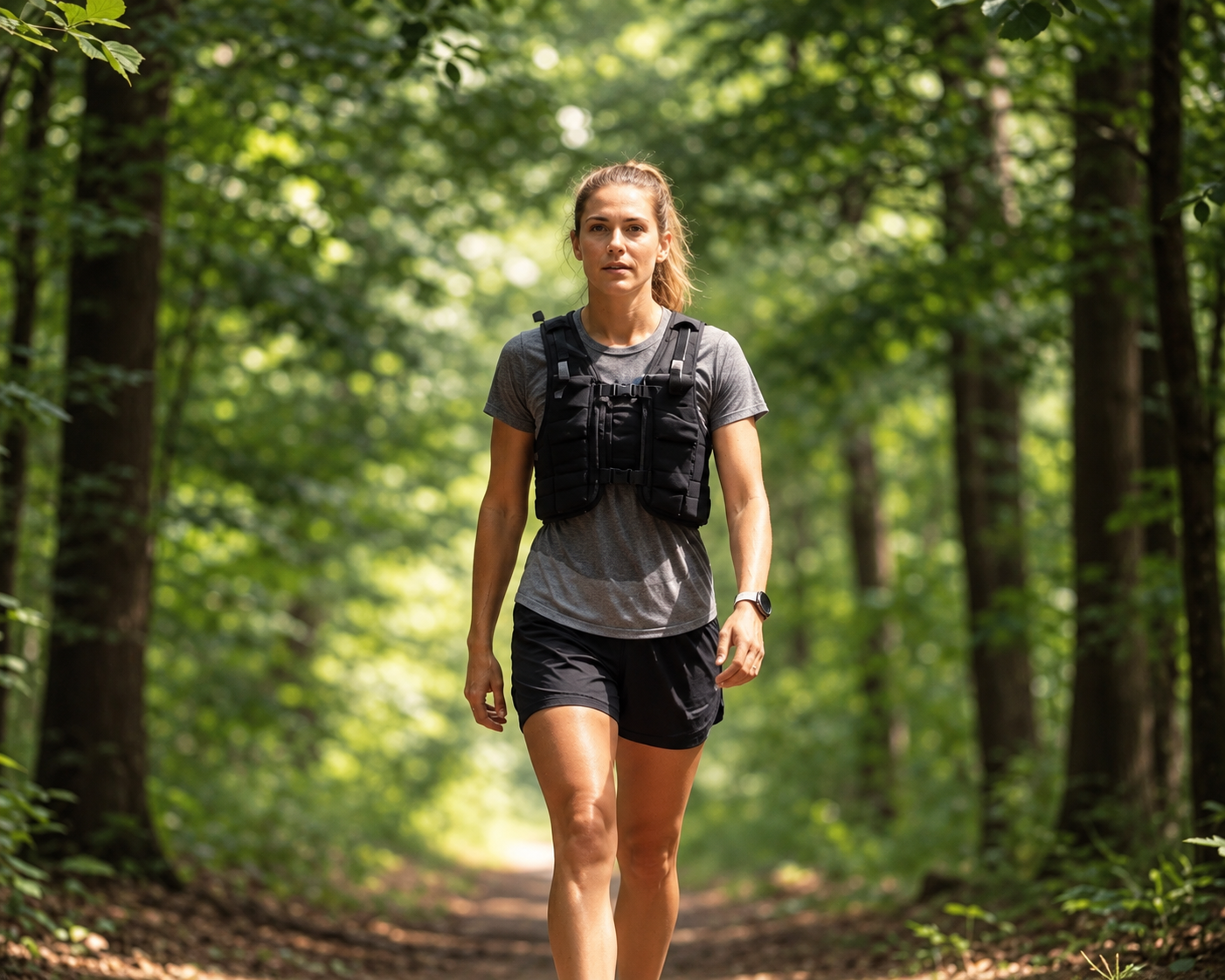
Listen, think and keep moving.
The RuckWild App presents themed audio challenges involving remembering information, updating it, changing rules and managing attention. Respond in your mind—no speaking, typing or looking at the screen is required.
Ten free sessions introduce Cognitive Fitness challenges through film, television, music and sports. Choose a theme, find the level that fits today and make cognitive training part of your regular workout.
Made for the Lifelong Athlete in All of Us
THE FIRST FITNESS ROUTINE
Walking with Weight Simply Works.
For millennia, humans have grown stronger by walking distance carrying weight. It's in our DNA. It's the workout we are designed to do—for lifelong strength and overall health.
The practice never required a $700 backpack, a subscription, a live dashboard or a company harvesting your data. It required weight, distance, effort and the willingness to keep moving and thriving.
- The Surprising Benefits of Rucking. Athletes with a history in running, cycling, and other endurance sport consistently report being pleasantly surprised by the extensive positive effects that rucking has on their body. A properly fitted backpack, loaded with weight, requires the core, abs, upper back and related stabilizing muscles to work to control the weight while the body moves. Rucking also builds strength in the glutes, quadriceps, calves, obliques, and lower back. Try it – your body will feel the difference.
- Sustained Aerobic Training. Rucking raises the cardiovascular demand of walking without requiring running speed. Pack weight, pace, hills and terrain can be adjusted to produce sustained aerobic or Zone 2 work.
- Productive Training - Lower Injury Risk. Rucking delivers a demanding cardiovascular and muscular workout while retaining a walking gait. Unlike running, there is no airborne phase followed by repeated landings. One foot remains on the ground when we walk, a natural motion that the human body tolerates far more favorably. That means far less repetitive pounding through the feet, knees, hips and back - and less exposure to the impact-related overuse injuries commonly associated with jogging, which in turn result in unproductive cycles of stop and restart over months - often years. Rucking, on the other hand, allows most adults to sustain a high training volume consistently, which leads to significantly better outcomes over the long-term.
- Stronger Bone Stimulus. Added resistance gives muscles and bones a loading stimulus that cycling and swimming do not provide. Jogging provides impact, but rucking adds weight to every step—creating a distinctive stimulus for muscles and bones.
- Posture and Stability. In our sitting and staring at screens culture, the muscles and other tissue designed to maintain our natural posture are neglected and gradually atrophy. A properly fitted pack engages the trunk, core, upper back, shoulders, neck and other stabilizing muscles to control weight while moving the body forward. Rucking rebuilds the essential strength and mobility our bodies need to remain stable, upright and efficient.
How to Ruck
Rucking is walking with added weight. A properly fitted compact backpack or weighted vest will work. Start with a manageable load, keep it stable and close to your body, stand tall and walk naturally.
Once recording begins, lock your phone and place it in your pocket. Pay attention to posture, effort, terrain, weather and the world around you. Review the numbers afterward.
Getting started with rucking →Build Steadily
Your first ruck is a starting point—not a test. Start slowly and build. Choose a light, stable load and a familiar route. Walk at a pace you can sustain while maintaining good posture and control.
You can make a ruck more demanding by increasing distance, duration, pack weight, pace, hills or difficult terrain. Do not increase them all at once. Build consistency first, then change one variable at a time.
Your Progress and Programs
Choose a graduated program: Begin, Build, Thrive or Elite. Each level offers a Long Course and a One-Hour Walk target. A ruck that meets the selected load, full distance and time target lights one point on the trail; ten qualifying rucks complete the level. Moving up is your choice.
Set your workout, then put the phone away and go. RuckWild records load, distance, time, estimated work rate in watts and estimated energy in calories for each saved ruck. Every saved workout stays in your history, including those that do not qualify for a selected program.
Your results remain on your device and are private.
RuckWild Life
A Human Reclamation Project.
We were never meant to spend our lives sitting in a box staring at a screen. Our value is not measured by what we consume, how many meaningless followers we have, or more performative achievements to try to impress those who don’t care about us. We don’t need more fake status or useless stuff.
We need our health. Health is not something we buy - it’s a way of living.
We need nature. More time outside, exploring, learning and building.
We need each other. Participating in life directly, not virtually.